
These easy protein pancakes are soft, fluffy, and made with simple ingredients like cottage cheese, rolled oats, eggs, and vanilla. They’re a delicious way to enjoy a protein-rich breakfast without relying on protein powder.
If you love pancakes but want a breakfast with more protein than a traditional pancake recipe, this easy homemade version is worth trying. The cottage cheese adds moisture and protein, while the oats create a hearty base.
Everything comes together in a blender, making these pancakes convenient for busy mornings or weekend meal prep.
Why You’ll Love These Protein Pancakes
- No protein powder required: Cottage cheese and eggs provide protein naturally.
- Simple ingredients: You only need a few everyday ingredients.
- Easy blender recipe: Blend the batter instead of mixing several bowls.
- Meal prep friendly: Make a batch and save portions for later.
- Customizable: Serve with berries, Greek yogurt, nut butter, or other toppings.
- Made with oats: Rolled oats add fiber and create a satisfying texture.
Ingredients for Protein Pancakes
This recipe makes approximately 8 small pancakes, depending on their size.
- 1 cup old-fashioned rolled oats
- ¾ cup cottage cheese (2% milkfat)
- 2 large eggs
- ¼ cup milk
- 1 teaspoon baking powder
- 1 teaspoon vanilla extract
- ½ teaspoon ground cinnamon
- 1 teaspoon maple syrup (optional)
- Pinch of salt
- Cooking spray or a little oil for the skillet

Ingredient Notes
Rolled oats: Old-fashioned rolled oats work well because they blend into a flour-like consistency. Quick oats may also work, but the batter texture can vary.
Cottage cheese: Adds moisture, creaminess, and protein. Blending helps create a smooth batter without noticeable curds.
Eggs: Help bind the ingredients and give the pancakes structure.
Milk: Adjusts the thickness of the batter. Add a little more if the batter becomes too thick.
Baking powder: Helps the pancakes rise and develop a lighter texture.
Vanilla and cinnamon: Add warmth and flavor without needing much added sugar.
How to Make Easy Protein Pancakes
Step 1: Blend the Oats
Add the rolled oats to a blender and blend until they resemble a coarse flour.
This creates a smoother batter than using whole oats.
Step 2: Add the Remaining Ingredients
Add the cottage cheese, eggs, milk, baking powder, vanilla, cinnamon, maple syrup if using, and salt.
Blend until the mixture is mostly smooth.
Step 3: Let the Batter Rest
Allow the batter to rest for about 5 minutes.
The oats will absorb some of the liquid, which may make the batter thicker. If needed, add 1 tablespoon of milk at a time until the batter is thick but pourable.
Step 4: Heat the Skillet
Heat a nonstick skillet or griddle over medium-low heat.
Lightly grease the surface with cooking spray or a small amount of oil.
Step 5: Cook the Pancakes
Pour approximately ¼ cup of batter onto the skillet for each pancake.
Cook for about 2–3 minutes, or until the edges begin to set and the underside is lightly golden.
Flip carefully and cook for another 1–2 minutes, or until the center is fully cooked.
Cooking times will vary depending on your stove and pancake thickness.
Step 6: Serve Warm
Transfer the cooked pancakes to a plate.
Serve with fresh berries, a spoonful of Greek yogurt, or a drizzle of maple syrup.
Tips for Fluffy Protein Pancakes
Don’t Make the Batter Too Thick
Oat-based batters thicken as they sit. Add a splash of milk if needed to maintain a pourable consistency.
Cook Over Medium-Low Heat
Protein pancakes can brown before the centers finish cooking if the skillet is too hot.
Lower heat gives the pancakes more time to cook evenly.
Make Smaller Pancakes
Small pancakes are easier to flip and less likely to break.
Use Fresh Baking Powder
Baking powder helps create a lighter texture. Make sure yours is still active.
Avoid Overcrowding the Pan
Leave enough space between pancakes so you can flip them comfortably.
Protein Pancakes Without Protein Powder
You don’t need protein powder to make a protein-rich pancake breakfast.
This recipe uses cottage cheese, eggs, and oats, which all naturally contain protein.
Cottage cheese is especially useful because it adds both protein and moisture to the batter.
The exact protein amount depends on the brands and serving sizes used.
If you prefer a different texture or flavor, you can experiment with plain Greek yogurt, but the liquid ratio may need adjustment.
Easy Protein Pancake Variations
Blueberry Protein Pancakes
Gently fold fresh blueberries into the finished batter before cooking.
Avoid blending the berries if you want visible pieces of fruit.
Banana Protein Pancakes
Add ½ small ripe banana to the blender for natural sweetness.
Because banana adds moisture, you may need slightly less milk.
Chocolate Chip Protein Pancakes
Sprinkle a small amount of chocolate chips onto each pancake immediately after pouring the batter into the skillet.
Cinnamon Apple Protein Pancakes
Top the cooked pancakes with warm cinnamon apples.
For a softer topping, cook chopped apples with a splash of water and cinnamon until tender.
Peanut Butter Protein Pancakes
Serve the pancakes with a spoonful of peanut butter or a drizzle of warmed peanut butter.
What to Serve With Protein Pancakes
These pancakes pair well with a variety of toppings and breakfast sides.
Try serving them with:
- Fresh strawberries, blueberries, or raspberries
- Plain Greek yogurt
- Sliced banana
- Peanut or almond butter
- Chopped walnuts
- A small drizzle of maple syrup
For a balanced breakfast, combine your pancakes with fruit and a protein-rich topping.
How to Store Protein Pancakes
Refrigerator
Allow the pancakes to cool, then transfer them to an airtight container.
Refrigerate promptly at 40°F (4°C) or below and use within 3–4 days.
Freezer
Arrange cooled pancakes in a single layer and freeze until firm.
Transfer them to a freezer-safe bag or container with parchment paper between layers to help prevent sticking.
For best quality, use within 1–2 months.
Reheating
Reheat refrigerated or frozen pancakes in a microwave, toaster oven, or skillet until heated thoroughly.
For refrigerated leftovers, reheat to 165°F (74°C).
Common Protein Pancake Mistakes
Pancakes Are Too Dense
This can happen when the batter is too thick or the baking powder is inactive.
Try adding a little more milk and using fresh baking powder.
Pancakes Fall Apart
The pancakes may be too large or flipped too early.
Make smaller pancakes and wait until the edges have set before flipping.
Pancakes Brown Too Quickly
Reduce the skillet temperature.
Oat-based pancakes can brown on the outside before the center is fully cooked.
Batter Becomes Too Thick
Rolled oats absorb liquid over time.
Stir in a small amount of milk before cooking the remaining pancakes.
Frequently Asked Questions
Are protein pancakes healthy?
Protein pancakes can fit into a balanced eating pattern. Their nutritional value depends on the ingredients, portion size, toppings, and overall diet.
Can I make protein pancakes without protein powder?
Yes. This recipe uses cottage cheese and eggs as natural protein sources.
Can I use oat flour instead of rolled oats?
Yes. Finely ground oat flour may work, but the exact amount and liquid ratio may need adjustment. Start with a similar weight of oat flour rather than assuming the volume is identical.
Can I make protein pancakes ahead of time?
Yes. Cooked pancakes can be refrigerated or frozen and reheated when needed.
Why are my protein pancakes not fluffy?
Possible reasons include a thick batter, inactive baking powder, or cooking at too high a temperature.
Can I make these pancakes without a blender?
You can use oat flour and whisk the ingredients together, but the cottage cheese may remain slightly lumpy unless blended separately.
Can I freeze protein pancakes?
Yes. Cool them before freezing, and store them in a sealed freezer-safe container.
More High-Protein Breakfast Ideas
Looking for another easy breakfast to prepare ahead of time?
Try our Cottage Cheese Egg Bites, made with eggs, cheddar, spinach, and bell peppers. They’re a convenient savory option for busy mornings.
You can also pair these pancakes with plain Greek yogurt and berries for a delicious breakfast.
Final Thoughts
These easy protein pancakes are a convenient homemade breakfast made with oats, cottage cheese, and eggs.
They’re simple to prepare, easy to customize, and useful for meal prep.
Whether you enjoy them with fresh berries, Greek yogurt, or your favorite toppings, these pancakes are a delicious addition to your breakfast rotation.
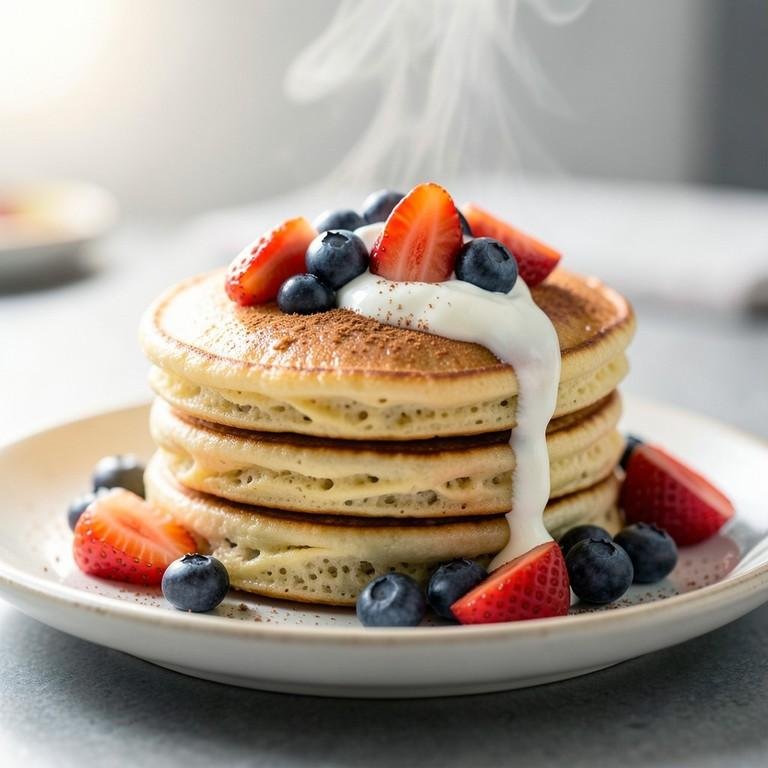
Fluffy Protein Pancakes
Ingredients
Method
- In a medium bowl, whisk the eggs, vanilla, stevia, and yogurt.
- 2 large eggs, 1 tablespoon vanilla extract, 1 teaspoon stevia glycerite, ½ cup plain Greek yogurt
- Add the protein powder and whisk until completely smooth and blended. Use a rubber spatula to scrape the sides of the bowl if needed.
- 2 scoops unsweetened whey protein powder
- Whisk in the baking powder. Let the batter rest while you heat the griddle. It slightly thickens as it rests.
- 1 teaspoon baking powder
- Heat a nonstick griddle or a large, 12-inch nonstick skillet over medium heat (not higher). If you use an electric stovetop, heat it on medium-low. Spray the skillet with oil.
- Using a 1.5-tablespoon cookie scoop, pour small mounds of the batter onto the griddle. A double-burner griddle will accommodate 8 pancakes. A large skillet will hold 3 or 4.
- Avocado oil cooking spray
- Cook the pancakes until they bubble on top, for about one minute. It happens fast! Flip and cook them on the second side for just a few more (10-20) seconds. It's important not to overcook them, or they will turn out dry and rubbery. Lower the heat to medium-low or low if needed.
- To flip the pancakes, carefully slide a wide spatula underneath each pancake, using a second spatula to ensure it rests on top of the wide one, then quickly flip the wide spatula.
- *See the notes section below for important tips.
- Transfer the cooked pancakes to a plate, cover them with foil to keep them warm, and cook the remaining pancakes. Serve immediately.
Notes
If something doesn’t turn out quite right, let me know in your comment whether you used the recommended protein powder - and if not, which one you did. That’ll help me troubleshoot with you! In the meantime, here are some suggestions to (hopefully) keep you out of trouble. I did my best to address the most common issues people run into.
The Pancakes are Dry
Too much protein powder will make the pancakes dry and powdery. It's best to scoop the powder out of the container, but then weigh it on a kitchen scale to make sure you're not using too much. When measuring by volume, many of us tend to be too generous and use heaping scoops. If you’re not weighing your protein powder, fluff it in the container before scooping and use a level scoop, not a packed or heaping one.
You can try using pea protein powder instead of whey, but the texture will be different. Pea protein is more absorbent, so the pancakes can turn out dense rather than light and spongy. They can also become too dry, so if your first few pancakes are dry, add Greek yogurt to loosen the batter (start with 2 tablespoons).
Cook the pancakes VERY minimally. They need less than a minute on the first side and just a few seconds on the second side. Several readers said it's best to cook them over low heat until lots of tiny bubbles appear on top and the bottom is set, then flip and cook for a few more seconds. This is especially true for electric stoves that can get hotter than gas stoves. However, in my experience, if the skillet isn't hot enough when adding the batter, the pancakes spread too much instead of puffing and keeping their shape, so I always start with medium heat and lower it if needed.
The Pancakes Fall Apart/Don't Hold Their Shape/Are Mushy
This seems to happen with some protein powders. I recently experimented with Equip's chocolate-flavored beef protein powder (omitting the vanilla and stevia) and had this issue. The pancakes ended up delicious, but cooking them was a struggle, for sure - they were soft and mushy and difficult to flip. The solution is to add flour. Try ¼ cup of almond flour (or 2 tablespoons of all-purpose flour if you're OK with gluten and carbs).
It's important to make small pancakes (I use a 1.5-tablespoon cookie scoop, not a 4-tablespoon ice cream scoop) since the batter is thin and spreads out.
They're Not Like Real Pancakes
These pancakes are flourless and gluten-free, so they’re definitely different from classic pancakes. Because protein powder is the main dry ingredient, its flavor and texture do come through, especially with certain brands and flavors. Some protein powders blend more smoothly than others, and flavored varieties can be more noticeable when heated. If you're looking for thick, substantial pancakes with a texture similar to regular pancakes, try these almond flour pancakes. A serving of those has half the protein compared to these, but they are much closer to the real thing.
Serving Size
A serving is half the recipe, which is about 9 small pancakes. In the video above, I made half a recipe. That's why I used just one egg.
Storing Leftovers
You can keep the leftovers in an airtight container in the fridge for 3-4 days. Gently reheat them in the microwave for just a few seconds. You can also freeze the cooled pancakes in a single layer in freezer bags. Defrost them in the microwave.
Nutrition
Serving: 9pancakes | Calories: 228kcal | Carbohydrates: 4g | Protein: 31g | Fat: 6g | Saturated Fat: 2g | Sodium: 134mg | Sugar: 2g