Mongolian Ground Beef Noodles deliver bold, savory flavor in a fast and satisfying format that fits perfectly into busy weeknight cooking. This dish combines tender ground beef, aromatic garlic, and a rich blend of soy sauce, hoisin sauce, and brown sugar, creating a glossy, irresistible sauce that clings to every strand of linguine. Ready in just 30 minutes, this recipe offers restaurant-style taste with minimal effort, making it a dependable go-to meal when time is limited but flavor expectations are high.
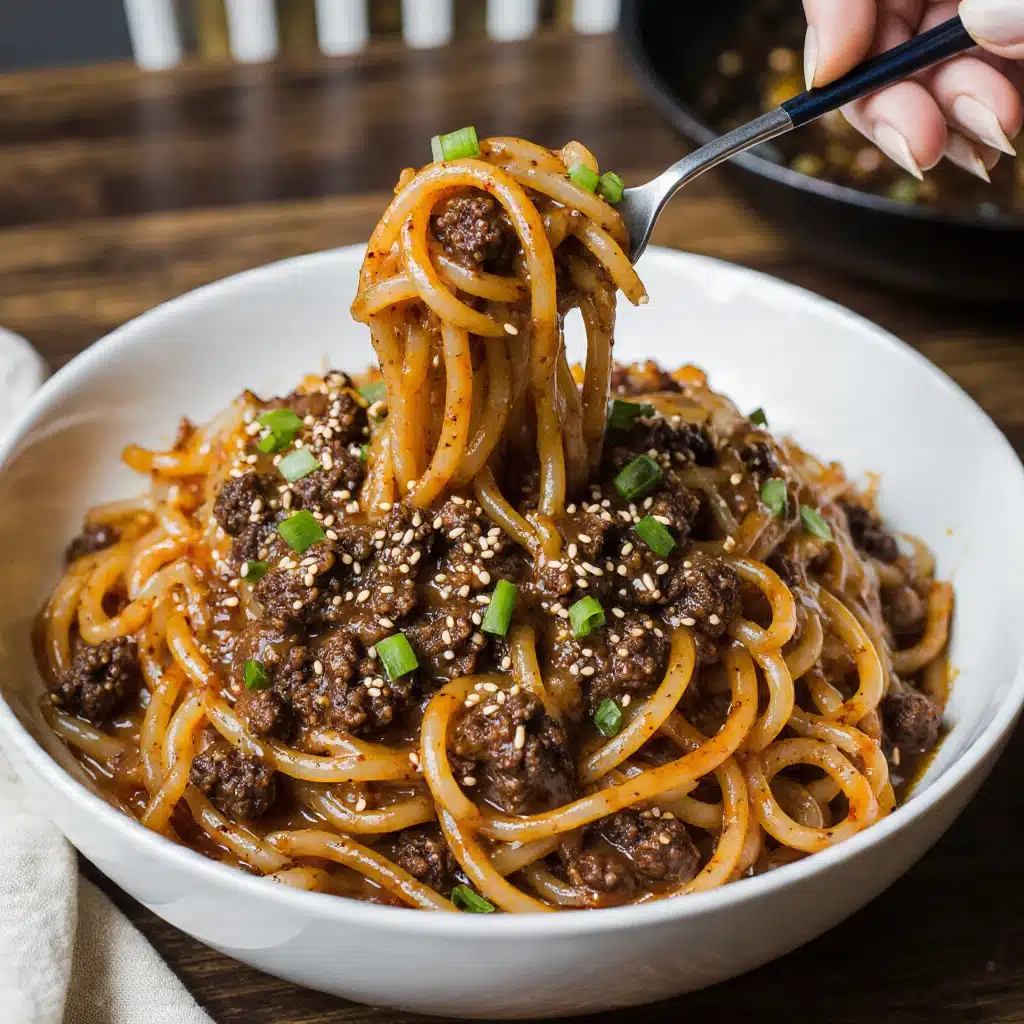
We focus on simplicity, balance, and efficiency, resulting in a dish that feels indulgent yet approachable, comforting yet vibrant.
Mongolian Ground Beef Noodles: A Quick and Flavor-Packed Comfort Meal
- Total Time: 30 minutes
- Yield: 4 servings 1x
Description
Mongolian Ground Beef Noodles are a quick, flavorful, and comforting dish combining tender ground beef with a sweet-savory sauce that coats linguine perfectly. Ready in just 30 minutes, this recipe is ideal for busy weeknights.
Ingredients
1 lb ground beef
5 cloves garlic, minced
1/3 cup brown sugar
1/4 cup beef broth
1/3 cup soy sauce
3 tablespoons hoisin sauce
1/2 teaspoon ground ginger
1/2 teaspoon ground black pepper
Pinch of red pepper flakes (optional)
10 oz linguine
1 tablespoon cornstarch
2 tablespoons water
4 green onions, sliced for garnish
Instructions
1. Cook the linguine according to package instructions and drain.
2. Brown the ground beef in a large skillet, draining excess fat.
3. Add minced garlic and cook until fragrant.
4. Stir in soy sauce, beef broth, brown sugar, hoisin sauce, ginger, black pepper, and red pepper flakes.
5. Mix cornstarch and water, then stir into the skillet to thicken the sauce.
6. Add cooked linguine to the skillet and toss to coat with sauce.
7. Simmer together for a few minutes to absorb flavors.
8. Garnish with sliced green onions and serve hot.
Notes
Best served hot and fresh.
Garnish with green onions for color and flavor.
Leftovers can be stored in the refrigerator for 3-4 days.
Freeze for 2-3 months in airtight containers.
Reheat gently to preserve sauce consistency.
Customize with extra vegetables or protein as desired.
- Prep Time: 10 minutes
- Cook Time: 20 minutes
- Category: Main Course
- Method: Stir-Fry
- Cuisine: Asian
Nutrition
- Serving Size: 1 plate
- Calories: 550
- Sugar: 12g
- Sodium: 900mg
- Fat: 28g
- Saturated Fat: 10g
- Unsaturated Fat: 16g
- Trans Fat: 0g
- Carbohydrates: 50g
- Fiber: 3g
- Protein: 32g
- Cholesterol: 100mg
Why Mongolian Ground Beef Noodles Are So Popular
This recipe stands out because it delivers maximum flavor with minimal ingredients. Ground beef cooks quickly and absorbs sauces exceptionally well, making it ideal for fast stir-fry-style dishes. The combination of sweet, salty, and umami-rich elements creates a flavor profile that is both familiar and deeply satisfying.
Unlike traditional Mongolian beef that requires slicing and marinating steak, using ground beef streamlines the process without sacrificing taste. Paired with linguine, the sauce coats each noodle evenly, ensuring consistent flavor in every bite.
Key Ingredients That Build Bold Flavor
Each ingredient in this recipe plays a precise role in creating depth and balance.
Ground beef provides richness and protein while acting as a base for the sauce.
Garlic adds aromatic intensity and savory warmth.
Soy sauce contributes saltiness and umami.
Hoisin sauce adds complexity, sweetness, and thickness.
Brown sugar balances the savory components with subtle caramel notes.
Beef broth loosens the sauce and enhances meaty flavor.
Ground ginger and black pepper add gentle heat and spice.
Red pepper flakes, optional, introduce controlled heat.
Cornstarch slurry thickens the sauce to a silky, clingy consistency.
Green onions provide freshness, color, and contrast.
Ingredients for Mongolian Ground Beef Noodles
- 1 lb ground beef
- 5 cloves garlic, minced
- 1/3 cup brown sugar
- 1/4 cup beef broth
- 1/3 cup soy sauce
- 3 tablespoons hoisin sauce
- 1/2 teaspoon ground ginger
- 1/2 teaspoon ground black pepper
- Pinch of red pepper flakes, optional
- 10 oz linguine
- 1 tablespoon cornstarch
- 2 tablespoons water
- 4 green onions, sliced, for garnish
Cooking the Linguine for Perfect Texture
We begin by cooking the linguine in a large pot of boiling, salted water according to package instructions. Properly cooked pasta should be al dente, offering slight resistance when bitten. This texture allows the noodles to hold up well when tossed with the sauce.
Once cooked, the pasta is drained and set aside. Reserving a small amount of pasta water is optional if additional moisture is needed later.
Browning the Ground Beef for Maximum Flavor
In a large skillet set over medium-high heat, the ground beef is cooked until fully browned and no longer pink. Browning develops rich, savory notes through caramelization, forming the foundation of the dish.
Excess fat is drained as needed to keep the final sauce balanced and not overly greasy, allowing the flavors of the sauce to shine.
Building the Mongolian-Style Sauce
Once the beef is browned, minced garlic is added and cooked briefly until fragrant. At this stage, the kitchen fills with a rich, savory aroma that signals the sauce is coming together.
The soy sauce, beef broth, brown sugar, hoisin sauce, ground ginger, black pepper, and red pepper flakes are added to the skillet. Everything is stirred thoroughly, allowing the ingredients to combine into a cohesive, glossy sauce.
The mixture is brought to a gentle simmer, giving the flavors time to meld.
Thickening the Sauce to Silky Perfection
In a small bowl, cornstarch is mixed with cold water until smooth, forming a slurry. This mixture is slowly stirred into the simmering sauce.
As the sauce heats, it thickens naturally, transforming into a rich coating that clings beautifully to both beef and noodles. The consistency can be adjusted by simmering slightly longer or adding a small splash of broth if needed.
Combining Beef and Noodles
The cooked linguine is added directly to the skillet with the thickened sauce and beef. Using tongs, everything is tossed together until the noodles are evenly coated.
Allowing the noodles to simmer briefly in the sauce ensures they absorb flavor, resulting in a cohesive dish rather than separate components.
Garnishing and Serving Mongolian Ground Beef Noodles
Just before serving, sliced green onions are sprinkled over the noodles. This final touch adds freshness, color, and a mild onion bite that balances the richness of the sauce.
The noodles are served hot, straight from the skillet, offering maximum aroma and flavor.
Flavor Profile and Texture Balance
Mongolian Ground Beef Noodles deliver a balanced combination of sweet, savory, and umami flavors. The sauce is rich without being heavy, glossy without being sticky, and bold without overwhelming the palate.
The tender beef, silky noodles, and fresh green onions create contrast in both flavor and texture, making each bite satisfying and complete.
Serving Suggestions for a Complete Meal
This dish works well as a standalone entrée, but it also pairs beautifully with complementary sides. Steamed vegetables, crisp salads, or Asian-inspired appetizers such as spring rolls or dumplings enhance the overall dining experience without overpowering the noodles.
Serving the dish family-style in a large bowl encourages sharing and adds a warm, communal feel to the meal.
Storage and Leftover Tips
Leftover Mongolian Ground Beef Noodles store exceptionally well, making them ideal for meal planning.
- Refrigeration: Store in an airtight container for 3 to 4 days
- Freezing: Freeze in freezer-safe containers for up to 2 to 3 months
Reheating Instructions for Best Results
For refrigerated leftovers, reheat gently in the microwave with a small splash of water to maintain moisture. Alternatively, reheat on the stovetop over medium heat, stirring occasionally until warmed through.
Frozen portions should be thawed overnight in the refrigerator before reheating. Adding a drizzle of sesame oil or fresh green onions before serving refreshes the dish and restores aroma.
Customizing Mongolian Ground Beef Noodles
This recipe is highly adaptable. Additional vegetables such as bell peppers, broccoli, or snap peas can be incorporated for added nutrition and texture. Protein substitutions, including ground turkey or chicken, work well while maintaining the integrity of the sauce.
Adjusting spice levels or sweetness allows the dish to suit a wide range of preferences without compromising its core flavor.
Why This Mongolian Ground Beef Noodles Recipe Works
We focus on efficiency, bold flavor, and balanced texture. Every step is intentional, ensuring consistent results with minimal effort. This approach delivers a dish that feels indulgent, comforting, and dependable, making it a standout choice for both weeknight dinners and meal prep.