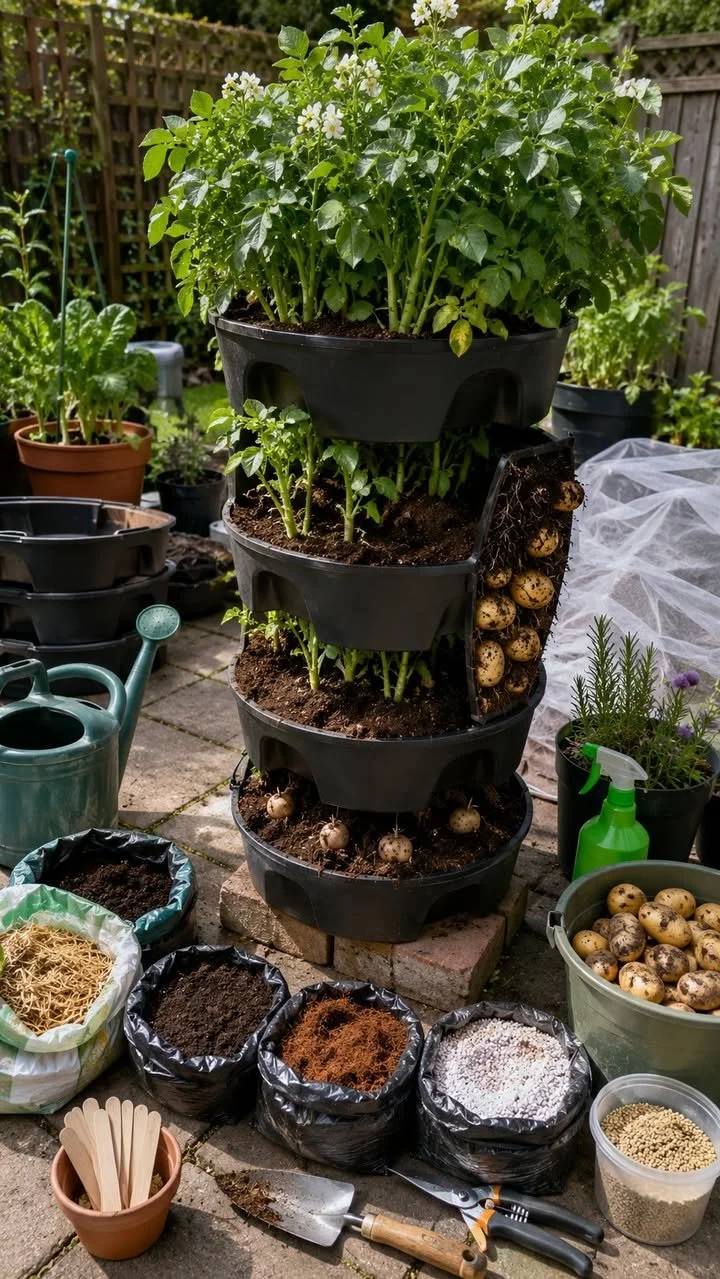
Grow Potatoes Vertically in Stackable Pots: A Complete Guide
Have you ever wanted to grow your own potatoes but felt limited by space or a lack of garden experience? If so, you’re not alone! Many beginners are eager to explore gardening but often hesitate due to space constraints or the perceived complexity of traditional methods. The good news is that you can enjoy a bountiful potato harvest even in small areas by using stackable pots to grow potatoes vertically.
In this guide, we’ll dive into everything you need to know about growing potatoes vertically, including tips for success and the advantages of this innovative method.
Why This Works
Growing potatoes vertically in stackable pots not only saves space but also maximizes yields. This method allows for proper airflow and sunlight exposure, which are essential for healthy plant growth. Additionally, using stackable pots makes it easier to manage pests, control soil quality, and access your plants without bending over or kneeling.
Main Content
Choosing Your Stackable Pots
When selecting stackable pots, look for durable materials that promote good drainage. Available options typically include:
- Plastic Pots: Lightweight and economical, these pots are an excellent choice for beginners.
- Fabric Pots: These encourage air circulation and help prevent overwatering while maintaining moisture.
- Wooden Planters: A more aesthetically pleasing option that can blend into your garden.
Preparing the Pots
Before planting, it’s crucial to prepare your stackable pots:
- Layering with Soil: Start with 4 to 6 inches of high-quality potting soil at the bottom of each pot.
- Adding Fertilizer: Mix in a slow-release fertilizer to provide nutrients throughout the growing season.
- Creating Drainage: Ensure each pot has drainage holes to prevent waterlogging.
Selecting Potatoes
Choose seed potatoes from a reliable source. Varieties like Yukon Gold, Red Pontiac, and fingerling types are ideal for vertical gardening. Look for firm, disease-free potatoes with “eyes” (the spots from which sprouts will grow).
Planting Your Potatoes
Follow these steps for successful planting:
- Cutting Seed Potatoes: If using larger potatoes, cut them into pieces, ensuring each piece has at least one eye. Allow them to heal for a day to minimize rotting.
- Planting: Place the seed potatoes on top of the initial soil layer, spaced about 8 to 12 inches apart, and cover them with another 4 inches of soil.
- Watering: Water thoroughly after planting but avoid soaking, as excess moisture can lead to rot.
Stacking Pots
Once the potato plants grow to about 6 inches tall, it’s time to stack:
- Remove the top pot from the stack.
- Add soil above the existing plants, burying stems as they grow. This encourages the plants to produce more tubers.
- Repeat this process as needed, adding additional pots and soil.
Care and Maintenance
Keep your potato plants thriving by following these care tips:
- Watering: Maintain consistent moisture, especially during dry periods. Aim for deep watering but let the soil dry out slightly between waterings.
- Fertilizing: Fertilize every few weeks with a balanced fertilizer to ensure balanced growth.
- Pest Management: Check regularly for pests like aphids or beetles. Utilize organic pest control methods to maintain a healthy garden.
Expected Results
If you follow these steps, you can expect a delicious harvest of homegrown potatoes just in time for summer barbecues and hearty fall meals. Excited family and friends will be amazed at how you grew so much in such a small space!
Extra Tips
- Choosing the Right Spot: Place your stackable pots in a location that gets full sun for at least 6 hours daily.
- Companion Planting: Consider planting herbs like basil or marigolds nearby; they can help deter pests.
Conclusion
Growing potatoes vertically in stackable pots is not only a space-saving solution but also a rewarding gardening venture. Whether you have a small balcony or a thriving backyard garden, this approach makes potato cultivation accessible and enjoyable for everyone. Take action today, and start your journey to delicious, homegrown potatoes. Happy gardening!