Regrow Grocery Lemongrass in Recycled Plastic Bottles: A Sustainable Gardening Hack
Are you tired of buying store-bought lemongrass every time your favorite recipe calls for it? What if you could transform kitchen waste into a never-ending source of this fragrant herb? With just a few simple tools and some recycled plastic bottles, you can easily regrow grocery store lemongrass at home! This eco-friendly method not only saves you money, but it also allows you to make good use of plastic waste while enriching your kitchen garden.
This article will guide you through the process step by step, ensuring that you can enjoy fresh, organic lemongrass year-round, no matter your gardening experience. Let’s dive in!
Why Regrow Lemongrass from Store-Bought Stalks?
Lemongrass is not only a flavorful addition to various dishes, especially in Asian cuisine, but it also boasts numerous health benefits as an herbal remedy. The good news is that lemongrass stalks available in grocery stores usually come with the root base intact. With just a little water, sunlight, and your patience, you can encourage these stalks to sprout roots and grow into new plants.
This method is perfect for:
- Urban gardeners with limited space
- Beginners eager to try their hand at propagation
- Eco-conscious individuals who want to upcycle plastic bottles
- Anyone looking for a fresh, organic supply of lemongrass right from their kitchen
Materials You Will Need
Before getting started, gather the following materials:
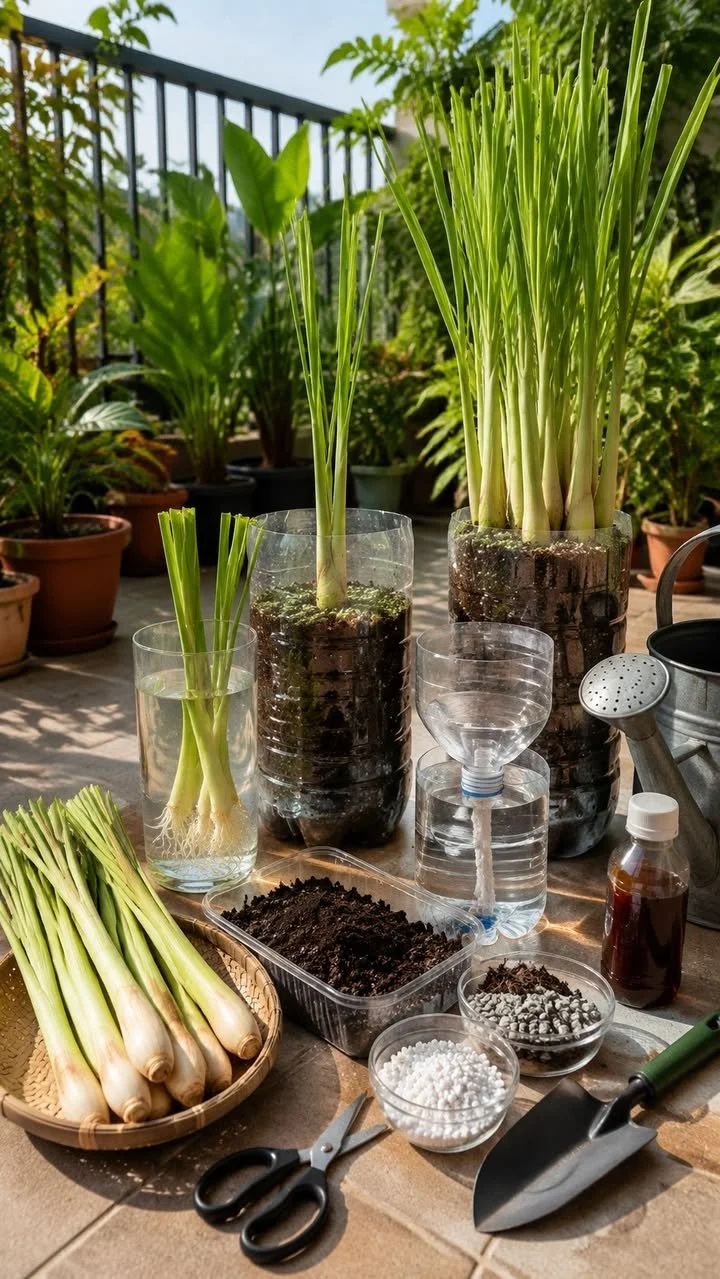
- 1 or more lemongrass stalks with the root base intact
- A clear plastic bottle (1.5 or 2-liter size works well)
- Sharp scissors or a utility knife
- Clean water (filtered or dechlorinated, if possible)
- Potting soil (for transplanting later)
- Optional: a small amount of compost or slow-release fertilizer
Step 1: Select and Prepare the Lemongrass
Choose firm and healthy-looking lemongrass stalks from your local grocery store. Look for stalks with the bulb-like base, as this is where the roots will form.
Trim off the top leafy part, leaving about 6 to 8 inches of the stalk with the base intact. Remove any dry outer leaves to expose the softer, green core—this step will help the plant thrive.
Step 2: Rooting in Water
Fill a clean jar, glass, or plastic bottle with enough water to cover the root base of the stalks. Place the trimmed lemongrass stalks into the container with the root side down. Set the container in a bright, warm location where it will receive indirect sunlight—like a kitchen windowsill.
Change the water every couple of days to keep it fresh and prevent rot. Within about 7 to 10 days, you should notice small white roots forming at the base, and green shoots starting to grow from the top. Once the roots are about 2–3 inches long and new growth appears, it’s time to transfer the lemongrass to your recycled bottle planter.
Step 3: Make a Recycled Bottle Planter
Take a clean 2-liter plastic bottle and cut it horizontally about 5 inches from the bottom to create an open-top planter. Be sure to poke a few small holes at the bottom for drainage.
For a self-watering option, cut the bottle in half, flip the top half upside down, and insert it into the bottom half to create a water reservoir. You can also insert a piece of cloth or cotton through the cap to act as a wick for drawing water up into the soil.
Next, add a layer of gravel or small stones for drainage, and then fill the container with a well-draining potting mix. You can mix in sand or perlite to enhance aeration.
Step 4: Transplant the Rooted Lemongrass
Once your lemongrass has developed roots, carefully remove it from the water and plant it into the prepared soil. Bury the roots and base about 1 to 2 inches deep, pressing the soil gently around the base to provide support.
Position your bottle planter in a sunny spot, such as a south-facing windowsill or balcony, where it can bask in at least 6 hours of sunlight per day.
Step 5: Care and Maintenance
Regularly water your plant, but avoid over-saturating the soil. Lemongrass prefers slightly moist conditions but requires excellent drainage to prevent root rot.
After your plant establishes itself, start feeding it with diluted organic fertilizer or compost tea every 3 to 4 weeks for optimal growth. Additionally, prune away any dead or yellowing leaves as needed. When the outer stalks become thick and firm, you can harvest them by cutting them at the base; new stalks will continue to grow from the center.
Growing Tips for Success
- Keep your lemongrass in warm temperatures, ideally in a sheltered, sunny spot.
- If the bottle planter starts to feel crowded, consider transplanting the lemongrass into a larger container or outdoor garden bed.
- During cooler months, bring your plant indoors to protect it from the cold.
- Stay vigilant for pests like aphids or spider mites; a simple spray of mild soap and water can help manage them.
Final Thoughts
Regrowing grocery store lemongrass in recycled plastic bottles is not just a sustainable and practical way to enjoy fresh herbs; it’s an empowering gardening project that anyone can try! This method saves you money, reduces waste, and efficiently utilizes kitchen scraps. Whether displayed on a sunny windowsill or balcony, with a little care, your homegrown lemongrass will flourish—infusing your kitchen and garden with beauty, fragrance, and flavor.
Why not give this eco-friendly gardening technique a try? You may discover a new passion for plants, all while doing your part to reduce plastic waste!