How to Harvest Big Yields of Potatoes in Small Pots
Growing potatoes in small pots might seem limiting, but with the right approach, you can produce impressive yields in minimal space. Whether you’re working with a small patio, a balcony, or even a sunny doorstep, container-grown potatoes can thrive and provide a satisfying harvest.
This guide will walk you through everything you need to know to grow and harvest a generous potato crop in compact containers.
Why Grow Potatoes in Pots?
Potatoes grow surprisingly well in containers because their underground tubers benefit from the loose, aerated soil found in pots. Containers also let you control watering, soil quality, and pest exposure more effectively than in traditional garden beds.
Growing in pots is especially useful for:
- Urban gardeners with limited space
- Reducing the risk of soil-borne diseases
- Making harvesting clean and simple
- Rotating crops easily season after season
Choosing the Right Pot
The most important factor in container potato gardening is depth. Potatoes grow underground and need room for their tubers to form. Choose a pot that is:
- At least 16 inches deep
- Around 12–16 inches wide (or larger)
Good container options include large plastic pots, grow bags, buckets, or even storage bins—just make sure they have drainage holes to prevent waterlogging.
Best Potato Varieties for Containers
Some potato types perform better in containers than others. Early and mid-season varieties tend to do best, as they mature faster and don’t require as much space to produce a good crop.
Top varieties for pot-growing include:
- Yukon Gold – creamy texture and reliable yields
- Red Pontiac – thrives in containers with quick growth
- Charlotte – a tasty salad variety with high output
- Fingerling potatoes – small, narrow, and ideal for tight spaces
- Annabelle – an early potato with smooth skin and firm flesh
You can use certified seed potatoes or sprouted organic potatoes from the store, as long as they haven’t been treated to prevent sprouting.
Preparing the Pot and Soil
Use a well-draining, nutrient-rich potting mix. Avoid garden soil, which is often too dense for container use and may harbor pests or diseases.
A simple mix for potato pots includes:
- 2 parts quality potting soil
- 1 part compost or aged manure
- Optional: a handful of perlite or sand to improve drainage
Before planting, mix in a balanced organic fertilizer or slow-release vegetable food. Potatoes are heavy feeders and need consistent nutrients as they grow.
Planting Potatoes in Containers
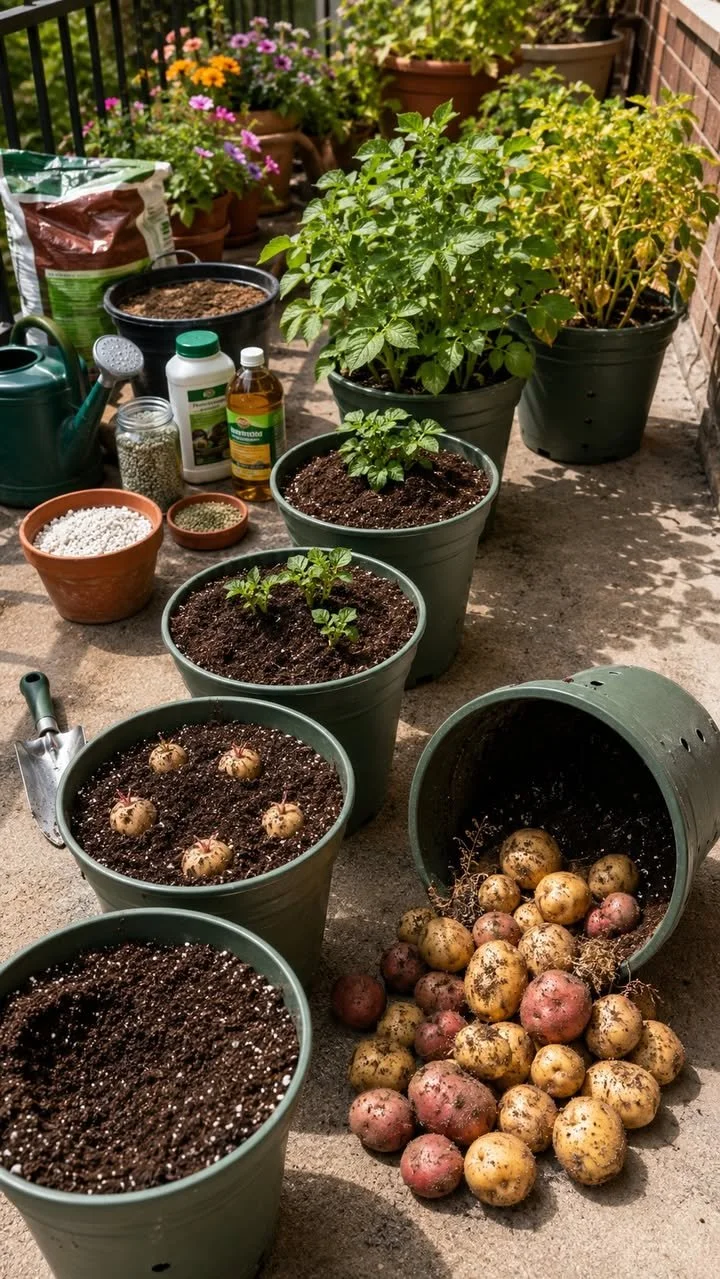
- Add 4–6 inches of soil to the bottom of your pot.
- Place 2–3 seed potatoes, eyes facing upward, evenly spaced.
- Cover with 3–4 inches of potting mix.
- Water thoroughly.
As the plants grow, continue adding soil (called “hilling up”) around the stems, leaving just the top leaves exposed. This encourages more tuber formation along the buried stems. Repeat this process every week or two until the soil reaches near the top of the pot.
Sunlight and Watering
Potatoes need 6–8 hours of full sunlight daily. Place your container in the sunniest spot available. If light is limited, consider rotating the container every few days to even out exposure.
Keep the soil consistently moist but not soggy. Check the top 1–2 inches of soil regularly—if it feels dry, water thoroughly until it drains from the bottom. During hot spells, daily watering may be necessary, especially in fabric or clay pots that dry out quickly.
Feeding and Maintenance
Feed container-grown potatoes every 3–4 weeks with a low-nitrogen, high-potassium fertilizer. Too much nitrogen encourages leafy growth at the expense of tubers.
As the plants grow, keep an eye out for common issues like:
- Yellowing leaves – could indicate underwatering or nutrient deficiency
- Pests – aphids or flea beetles can be treated with neem oil or insecticidal soap
- Rotting tubers – often caused by poor drainage or overwatering
Regularly remove any dead or yellowing foliage to keep the plants healthy and focused on root production.
Harvesting Potatoes
Your potatoes will be ready to harvest when the foliage begins to yellow and die back, usually 10–12 weeks after planting for early varieties.
To harvest:
- Stop watering once the plants begin to die back.
- Let the container dry out for a few days.
- Gently dump out the container or dig with your hands to avoid damaging tubers.
- For new (baby) potatoes, you can gently dig around the edges of the container and pick a few once the plant begins flowering.
Storage Tips
Brush off excess soil but don’t wash potatoes until you’re ready to use them. Cure them by placing them in a dark, dry, cool area for 1–2 weeks. This toughens the skin and extends shelf life.
Store mature potatoes in a cool, dark, well-ventilated place. Avoid storing in the fridge, which alters the flavor and texture.
Conclusion
Growing potatoes in small pots is an easy and rewarding way to enjoy fresh, homegrown food—even in tight spaces. With a deep container, good soil, proper feeding, and a little attention, you can harvest big yields of flavorful potatoes right from your patio or balcony. Happy gardening!