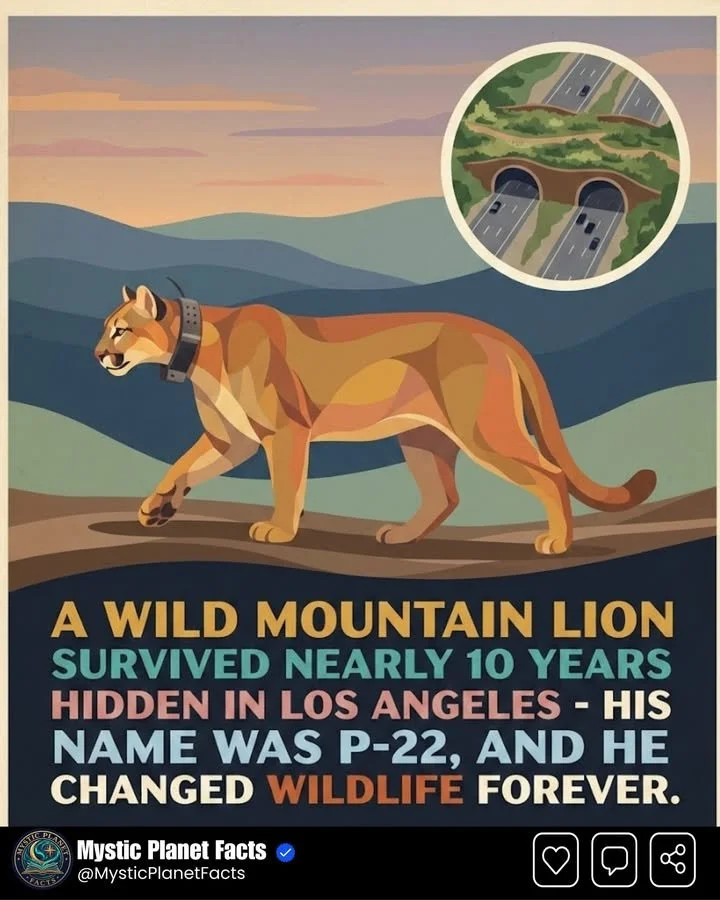
The Legacy of P-22: A Mountain Lion’s Fight in Concrete LA
For a decade, a solitary mountain lion named P-22 roamed the hills of Los Angeles, a fierce predator navigating an ocean of asphalt. Against all odds, he crossed two of America’s deadliest freeways to find sanctuary in Griffith Park, an oasis of wildlife amidst the concrete jungle. His remarkable journey was not just a tale of survival but a poignant message about the ever-pressing reality of human expansion.
Why This Matters
P-22 didn’t simply exist; he thrived in a world that was slowly engulfing his habitat. With millions of people around him, this wild puma embodied resilience, swerving around danger and hunting under the cover of darkness. The plight of P-22 highlighted the stark truth: wildlife doesn’t just disappear when cities rise; it endures, adapts, and waits for us to acknowledge its presence.
His solitary struggle and tenacious spirit did more than just capture the attention of urban dwellers; it sparked a conservation revolution. P-22’s life became the catalyst for the Wallis Annenberg Wildlife Crossing—an innovative and massive bridge designed to reconnect wildlife with their fragmented habitats and ensure that no other animal faces isolation as he did.
P-22’s Impact
P-22’s existence raised awareness about the harsh realities faced by wildlife as urban sprawl continues to encroach on their territories. He was a testament to the fact that the natural world is not easily eradicated; it fights to survive even when long odds are stacked against it. His story prompted discussions about our shared responsibility to protect the vulnerable ecosystems that remain.
When P-22 tragically lost his life in December 2022 due to a vehicle strike, the world mourned not just an animal, but a symbol of resilience and hope for wildlife conservation. His death served as a stark reminder of the fragile balance between urban development and the natural world, urging us to consider the implications of our actions on wildlife.
The Future of Wildlife Conservation
The legacy P-22 leaves behind is transformational. The Wallis Annenberg Wildlife Crossing and similar initiatives aim to bridge the divide between urban areas and wildlife habitats, creating safe paths for animals to traverse without the constant threat of traffic. This monumental infrastructure project is a beacon of hope, demonstrating that progress can be made in harmony with nature.
Wildlife conservation has become more than just a call to action; it’s a movement inspired by the very existence of creatures like P-22. He has taught us that we must meet wildlife halfway—acknowledging their struggles and finding solutions to coexist.
What We Can Learn
As we reflect on the life of P-22, several key lessons emerge:
- Resilience is Powerful: Wildlife’s ability to adapt to changing environments shows us the strength of nature.
- Awareness is Crucial: Understanding the impact of urbanization on wildlife is key to conservation efforts.
- Collaboration is Essential: Working together to create safe pathways for animals can lead to effective solutions that benefit both wildlife and humans.
Conclusion
P-22 was more than just a mountain lion; he was a symbol of endurance and a call to action. His life and untimely death remind us of the persistent struggle of wildlife against human expansion. As we look towards the future, we must remain vigilant, ensuring that the stories of creatures like P-22 inspire us to advocate for conservation, embrace innovative solutions, and protect the natural world that still exists within our cities.
In honoring P-22, let us commit to building a future where nature and urban life coexist peacefully, creating a brighter path for generations of wildlife to come.
#P22 #WildlifeConservation #LosAngeles