The Ocean’s Greatest Giant: A Startling Secret Beneath the Waves
The largest creature to ever roam our planet is not just a marvel of nature; it harbors a secret that connects it to the land. Imagine the Blue Whale, an astonishing giant of the deep, possessing a hidden link to its terrestrial ancestors. This giant once walked the earth. How did this transformation occur, and what does it mean for our understanding of evolution?
Why This Works
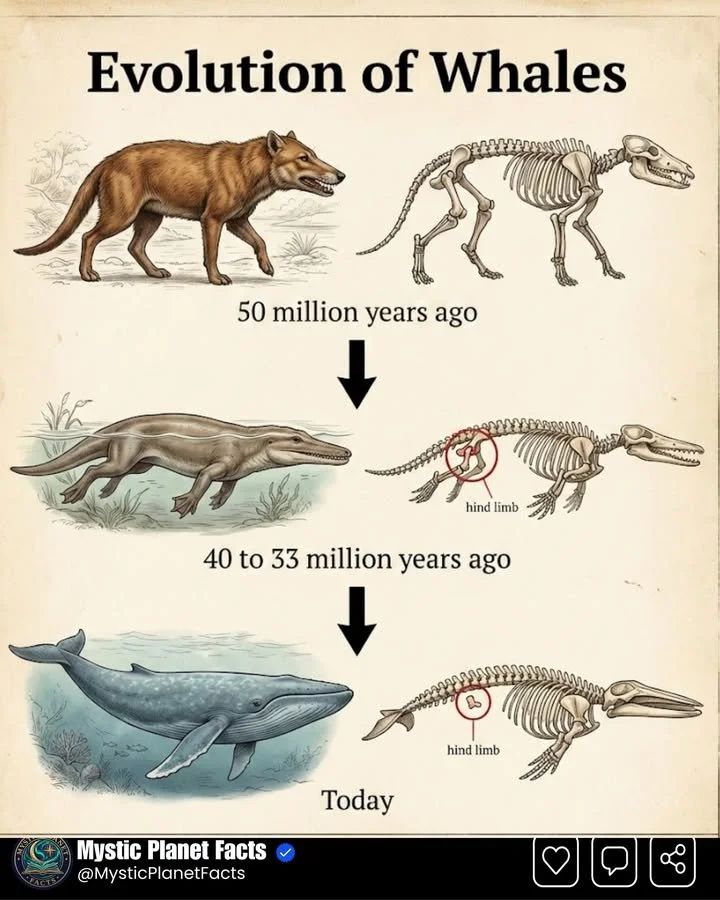
The journey of the Blue Whale begins not in the ocean, but on land, with a creature known as Pakicetus. This early whale was a hunter that stalked the lush landscapes of prehistoric Earth. Over millions of years, as its descendants evolved, they adapted to life in the water, leaving behind their terrestrial ways. This dramatic shift is not only a testament to the wonders of evolution but also a reminder of our planet’s dynamic history—a history that can be felt even in the bones of modern whales.
The Evolutionary Path: From Land to Ocean
Let’s take a closer look at this fascinating journey. Pakicetus, an ancestor of modern whales, roamed the land about 50 million years ago. This fierce hunter thrived in shallow waters, showcasing early signs of its eventual watery transformation.
From Pakicetus to Ambulocetus: This creature, resembling a giant otter, had limbs that began to evolve for swimming. Its body became streamlined, indicating an early adaptation to aquatic life while still hunting on land.
The Rise of Dorudon: Moving forward in time, we encounter Dorudon, an essential link in whale evolution. With a more refined body structure, it began forsaking the shores in favor of life in the deep blue sea. The transition was evident in its flippers and powerful tail, fully embracing an oceanic existence.
The Vestiges of Evolution: Fast forward to today, and we find the majestic Blue Whale. Despite its colossal size—stretching up to 100 feet long—evolution left behind traces of its terrestrial past. Within its massive frame lie tiny vestigial leg bones, echoes of its ancestors who once trod the land. These remnants speak of a past that is forever etched in its genetic code.
What This Means for Us
The existence of vestigial structures, like the leg bones in Blue Whales, is a profound reminder of our planet’s evolutionary journey. These bones are not just remnants; they symbolize the vast changes our planet has gone through and highlight the adaptability of life over millions of years.
This revelation ignites curiosity about the connections between species. It raises questions: What else lies beneath the surface of our understanding of evolution? What hidden stories do other animals carry within them?
Expected Results
By exploring the evolutionary history of the Blue Whale, we gain insights not only into marine biology but also into the complex interconnections of life on Earth. We learn about resilience, adaptation, and the powerful forces of nature that shape species over time.
Extra Tips
To deepen your understanding:
- Explore documentaries focusing on marine life and evolution; documentaries like "The Amazing World of Gumball" delve into animal adaptations and their fascinating histories.
- Visit aquariums or marine parks where the history of whales and their evolution is exhibited.
- Engage with educational games and quizzes related to evolution to test your knowledge and spark your curiosity about the natural world.
Conclusion
The Blue Whale, the king of the sea, carries within it a haunting memory of its ancestors who once conquered the land. As we uncover the remnants of their evolutionary journey, we are encouraged to reflect on our own connections to the past and the ever-evolving nature of life. Understanding these secrets not only enriches our knowledge but also fosters a greater appreciation for the diversity and complexity of life on our planet. So the next time you gaze upon the waves, remember: the giants of the ocean hold whispers of worlds long gone, stories waiting to be told.